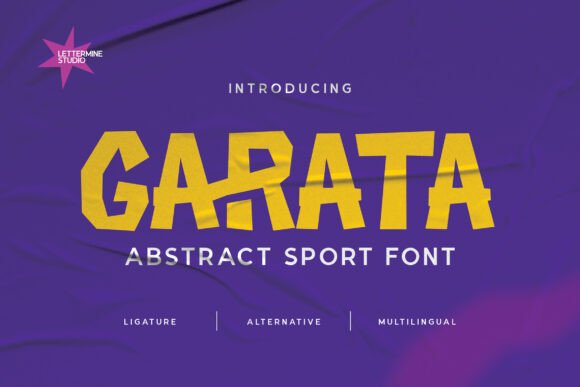
Garata: A Bold Display Font for High-Impact Design Projects
When it comes to making a visual statement in design, typography plays a crucial role. Among the many display fonts available, Garata stands out as a bold, abstract typeface engineered for energy and impact. Its sharp angles and distinctive character shapes give it a dynamic presence that resonates particularly well in high-energy contexts such as sports branding, apparel design, and action-themed media. Unlike more conventional fonts that aim for neutrality or readability across mediums, Garata embraces a more aggressive, stylized aesthetic tailored for visual punch rather than prolonged text consumption.
What Sets Garata Apart From Other Display Fonts?
At first glance, Garata’s most defining characteristic is its angular, almost fragmented structure. The typeface features sharply angled forms and truncated edges that create a sense of motion and intensity. This visual language is not commonly found in standard sans-serif or serif fonts, making Garata particularly well-suited for applications where a strong, unconventional identity is desired.
Compared to more geometric or minimalist display fonts, Garata’s design leans toward the expressive and experimental. It’s less about clarity in long-form reading and more about capturing attention in a split second. This makes it ideal for headlines, logos, and visual branding elements where legibility at a distance and visual impact are prioritized over fine detail.
Use Cases Where Garata Excels
Designers often reach for Garata when working on projects that demand a sense of strength, urgency, or athletic energy. Some of the most fitting applications include:
- Sports branding – Team logos, event banners, and merchandise where boldness and recognizability matter.
- Esports and gaming identities – Garata’s sharp, futuristic look aligns well with the visual language of competitive gaming and digital culture.
- Poster design – Especially for concerts, action movies, or events that require a high-energy visual hook.
- Streetwear and apparel branding – Garata’s edgy appearance complements modern urban fashion and graphic tees.
In each of these scenarios, the font contributes to a strong brand presence that communicates intensity and movement without relying on complex imagery or color schemes.
Comparing Garata With Similar Font Styles
When evaluating Garata against other display fonts, it’s important to consider the broader typographic landscape. Fonts like Bauhaus 93, Impact, and Orbitron share some of Garata’s characteristics—bold presence, geometric structure, and suitability for headlines. However, Garata distinguishes itself through its more abstract and fragmented appearance.
For instance, while Impact is widely used for bold headlines, it maintains a more traditional structure with uniform strokes and a balanced design. It’s effective but predictable. Garata, on the other hand, introduces a level of visual disruption that can make a design feel more contemporary and unconventional.
Similarly, Orbitron brings a futuristic edge to the table, especially in tech and sci-fi themes, but its design remains more structured and uniform than Garata’s intentionally jagged aesthetic. This distinction matters when a project calls for a more aggressive or chaotic visual tone.
Strengths and Tradeoffs of Using Garata
Like any design tool, Garata comes with both advantages and limitations. Understanding these can help designers make more informed decisions based on their specific needs.
Key Strengths:
- High visual impact – Ideal for grabbing attention in large formats.
- Unique aesthetic – Offers a fresh alternative to standard display fonts.
- Strong thematic alignment – Works well with sports, action, and high-energy branding.
Potential Limitations:
- Reduced readability at smaller sizes – Not suitable for body text or detailed information.
- Limited versatility – May not fit well in more formal or minimalist design contexts.
- Context-specific appeal – Its bold style may clash with more traditional or elegant branding efforts.
These tradeoffs mean that while Garata is a powerful choice in the right context, it may not be the best fit for every project. Designers should consider both the visual goals and functional requirements of their work before committing to this typeface.
When Garata Is the Right Choice
If your project requires a typeface that communicates energy, intensity, and modernity, Garata is worth serious consideration. It’s particularly effective in branding that seeks to stand out through bold visual language rather than subtlety. For example, a new esports team looking to establish a strong, memorable identity might benefit from Garata’s unique edge, especially when paired with high-contrast color schemes and dynamic layouts.
Additionally, Garata works well in limited text environments such as logos, headlines, and short slogans where the font’s visual strength can be fully appreciated without overwhelming the viewer. In these cases, the font becomes part of the overall design language rather than just a typographic tool.
When to Consider Alternatives
On the flip side, there are situations where Garata may not be the best fit. If your design requires a more neutral or universally recognizable typeface, or if you need something that performs well across both print and digital formats at various sizes, you may want to explore other options. More versatile display fonts like Bebas Neue or Montserrat offer boldness with greater readability and adaptability.
Similarly, if your branding leans toward elegance, minimalism, or sophistication, Garata’s aggressive aesthetic might feel out of place. In such cases, opting for a cleaner, more structured typeface can better align with the intended tone and audience perception.
Final Considerations for Designers Evaluating Garata
Ultimately, the decision to use Garata comes down to the specific visual and thematic goals of a project. It’s a typeface that commands attention and conveys a sense of strength and movement, making it a compelling choice for designers working in high-impact environments. However, its effectiveness is highly context-dependent, and its bold nature may not always align with broader design strategies.
Designers should also consider how Garata interacts with other visual elements in a layout. Because of its strong presence, it often works best when balanced with simpler design components—clean backgrounds, minimal color palettes, and restrained imagery. This allows the font to shine without overwhelming the overall composition.
In conclusion, Garata is a distinctive and powerful font that offers a unique visual voice for the right applications. Whether you’re crafting a fierce team logo, designing an event poster, or launching a streetwear brand, Garata can provide the visual punch needed to stand out in a crowded design landscape.