Khedelic: The Retro-Futuristic Font Redefining Groovy Typography
Typography plays a crucial role in shaping visual communication, and the rise of retro-inspired fonts has added a nostalgic yet fresh dimension to modern design. Among these, Khedelic stands out as a bold, psychedelic typeface that merges the vibrant energy of the 60s and 70s with contemporary design sensibilities. Its wavy contours, 3D depth, and unmistakable grooviness make it a go-to choice for creatives aiming to evoke a sense of retro futurism.
The Visual Language of Khedelic
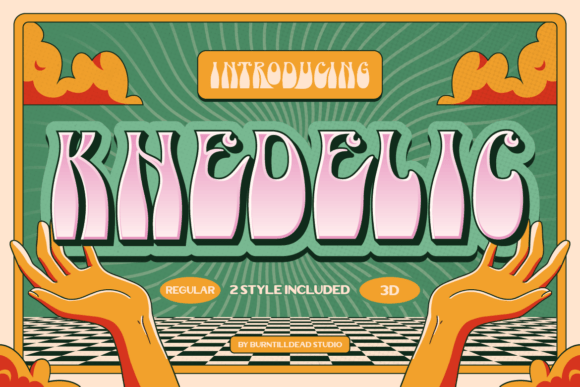
At first glance, Khedelic commands attention. The font’s wavy baseline and exaggerated curves mimic the fluidity of sound waves and light patterns often associated with psychedelic art. Its bold structure ensures legibility even in dynamic compositions, while the 3D variant adds a tactile dimension that enhances its visual impact. These characteristics combine to create a typographic experience that is both expressive and functional.
Designers often describe Khedelic as a font that “dances on the page.” This kinetic quality is not just aesthetic—it serves a purpose. In design contexts where visual hierarchy and emotional resonance are key, Khedelic can act as a focal point that guides the viewer’s eye and amplifies the message.
Two Styles, One Bold Identity
Khedelic is available in two distinct styles: Regular and 3D. The Regular style captures the essence of hand-drawn lettering with its fluid strokes and vintage charm. It’s ideal for projects that require a more organic, human feel. The 3D version, on the other hand, introduces a layered, dimensional effect that adds depth and realism. Whether used for print or digital media, both styles offer flexibility while maintaining a consistent visual identity.
- Regular: Best for clean, stylized layouts with a retro edge.
- 3D: Perfect for high-impact visuals needing a modern twist.
Applications in Real-World Design
The versatility of Khedelic makes it suitable for a wide range of applications. From music branding to digital marketing, this font finds a home wherever creativity and nostalgia intersect. Let’s explore some of the most common use cases where Khedelic shines:
1. Music Posters and Festival Flyers
Concert posters and festival flyers often rely on strong visual cues to convey the vibe of the event. Khedelic’s groovy, rhythmic appearance aligns perfectly with genres like rock, psychedelic, electronic, and indie. Whether used for a headline or a tagline, it immediately communicates a sense of energy and movement, making it an ideal match for music-related branding.
For example, a psychedelic rock festival flyer might use Khedelic in 3D to create a dramatic title that pops off the page. Pairing it with vintage color schemes like mustard yellow, burnt orange, and deep purple enhances the retro feel.
2. Vintage Logos and Brand Identities
Brands aiming to evoke a sense of timelessness or nostalgia often incorporate retro typography into their logos. Khedelic offers a modern take on this approach, blending vintage aesthetics with contemporary readability. It works especially well for businesses in the lifestyle, wellness, and creative sectors.
A boutique coffee shop, for instance, could use Khedelic in a stylized logo to convey a relaxed, vintage-inspired brand personality. The font’s curves and bold presence ensure the logo remains memorable and distinct.
3. Band Merchandise and Album Covers
Merchandise and album art are extensions of a musician’s identity. Khedelic’s expressive nature makes it a strong contender for band tees, vinyl covers, and promotional materials. The font’s ability to stand out without overshadowing the imagery allows it to complement a wide range of artistic styles.
4. Social Media and Digital Content
In the realm of digital marketing, visual appeal is key to engagement. Khedelic’s dynamic form makes it ideal for Instagram stories, YouTube thumbnails, and TikTok visuals that need to capture attention quickly. Its bold and slightly exaggerated design ensures that text remains legible even when viewed on small screens.
For example, a creator designing a series of retro-themed reels might use Khedelic to overlay catchy text that enhances the overall aesthetic without distracting from the content.
Technical Advantages and Usability
Beyond its visual appeal, Khedelic offers several technical benefits that make it a practical choice for both professional and amateur designers. One of its standout features is PUA encoding, which ensures compatibility across various design platforms and software. This means users can access all glyphs and special characters without needing advanced font management tools.
Additionally, Khedelic supports a wide range of languages and includes ligatures and alternate characters, allowing for more nuanced typographic expression. Whether designing for print or web, the font maintains its integrity across different mediums and resolutions.
Accessibility Considerations
While Khedelic excels in creative design, it’s important to consider its readability in different contexts. Due to its stylized nature, it’s best used for short text blocks such as headlines, titles, and captions. For longer body copy, pairing it with a clean sans-serif or serif font can maintain both visual interest and legibility.
Who Benefits from Using Khedelic?
Khedelic appeals to a diverse group of users, each with unique design goals but a shared appreciation for expressive typography. Here are some key user profiles who can benefit from incorporating this font into their projects:
- Graphic designers: Looking for a distinctive font for branding, packaging, or editorial design.
- Musicians and event planners: Needing strong visual identities for concerts, albums, or festivals.
- Digital creators: Seeking to enhance social media visuals with a retro yet modern aesthetic.
- Entrepreneurs and small business owners: Wanting to create memorable logos or promotional materials with personality.
- Artists and illustrators: Exploring typographic integration in mixed-media or vintage-inspired artwork.
Integrating Khedelic into Your Design Workflow
Incorporating Khedelic into your design process is straightforward, especially with its PUA encoding which simplifies character access. Here are a few tips for maximizing its impact:
- Use it sparingly: Given its strong visual presence, limit its use to key elements like headlines and titles.
- Pair with complementary fonts: Combine Khedelic with more neutral typefaces to create balance and contrast.
- Experiment with effects: Try layering, color gradients, or drop shadows to enhance its 3D qualities.
- Test for legibility: Always preview your design across devices and sizes to ensure clarity.
Whether you’re working in Adobe Illustrator, Photoshop, Figma, or Canva, Khedelic integrates seamlessly, allowing you to focus on creativity rather than technical limitations.
Why Khedelic Stands Out in a Crowded Font Landscape
In an era where minimalist and modern fonts dominate, Khedelic offers a refreshing alternative. It doesn’t just communicate a message—it evokes a feeling. The font’s ability to transport viewers back to the groovy era of the 60s and 70s while maintaining a fresh, modern edge is what sets it apart from other retro-inspired typefaces.
Moreover, its dual-style offering (Regular and 3D) gives designers the flexibility to adapt it to various projects without compromising on style. Whether you're designing a vintage logo or a futuristic album cover, Khedelic delivers a unique visual punch that’s hard to replicate with other fonts.
Final Thoughts
In the world of typography, trends come and go, but certain fonts manage to carve out a lasting niche. Khedelic is one such font—its retro-futuristic design, expressive personality, and practical usability make it a valuable asset for any designer’s toolkit. Whether you're crafting a festival poster, rebranding a business, or simply experimenting with vintage aesthetics, Khedelic offers the perfect blend of nostalgia and innovation.