Marching Brush: A Typeface That Commands Attention
If you're searching for a typeface that delivers raw energy and a sense of controlled chaos, Marching Brush might be the right fit for your design needs. This hand-painted brush font stands out for its intense visual impact, making it a compelling option for projects that demand boldness and presence. Unlike more refined or polished fonts, Marching Brush leans into imperfection, using texture, contrast, and movement to create a visceral response.
What Makes Marching Brush Unique?
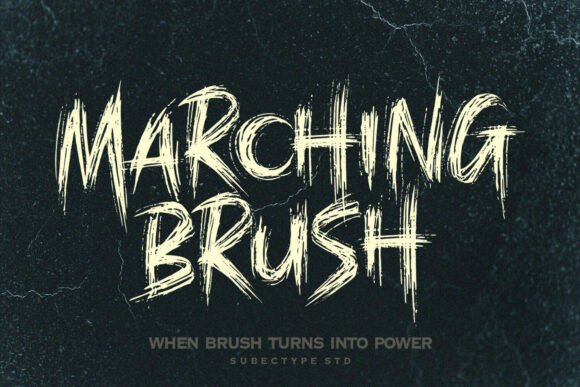
At its core, Marching Brush is defined by its expressive, hand-painted strokes. These strokes aren't just aesthetic choices—they're deliberate design elements that evoke a sense of urgency and power. The font’s texture mimics actual brushwork on canvas, complete with drips, splatters, and uneven edges. This gives it a raw quality that feels both organic and unpredictable.
One of its practical advantages is its PUA encoding, which allows easy access to alternate characters, swashes, and ligatures. This flexibility makes customization straightforward, letting designers tailor the font to their specific visual language without requiring advanced technical skills. Whether you're layering text over dark backgrounds or using it as a focal point, the font maintains its legibility while amplifying mood.
How Does Marching Brush Compare to Other Brush Fonts?
Brush fonts come in many forms, ranging from soft and fluid to aggressive and jagged. Marching Brush sits firmly in the latter category. Compared to more elegant or stylized brush scripts, it trades refinement for intensity. This makes it less suited for wedding invitations or luxury branding but ideal for horror-themed designs, underground music covers, or edgy promotional material.
Some brush fonts aim for realism, mimicking calligraphy or ink strokes with precision. Marching Brush, however, embraces distortion and exaggeration. Its sharp edges and dripping effects are more evocative of horror and rebellion than elegance or tradition. This distinction is important when selecting a font that aligns with the tone of your project.
Strengths and Limitations
The strengths of Marching Brush lie in its ability to convey mood and movement. It’s not just a font—it's a design element in itself. When used appropriately, it can elevate a layout from ordinary to attention-grabbing. It works especially well in contexts where visual impact is more important than readability over long passages.
- Strengths: High visual impact, expressive texture, PUA-encoded for customization, strong thematic fit for horror, action, or rebellion.
- Limitations: Not suitable for formal or minimalist design, may overwhelm subtle layouts, less ideal for body text or extended reading.
Because of its aggressive aesthetic, it's best used sparingly. Overuse can lead to visual fatigue or dilute its effect. Designers should consider pairing it with simpler fonts to maintain balance and hierarchy within a layout.
When Is Marching Brush the Right Choice?
If your project requires a strong visual identity that leans into darkness, chaos, or raw energy, Marching Brush could be the right choice. It's particularly effective in:
- Horror and thriller branding – Movie posters, book covers, and promotional materials benefit from its unsettling texture.
- Music and event posters – Especially in genres like metal, punk, or alternative where intensity and edge are part of the brand.
- Urban and streetwear branding – Its rugged look aligns with the aesthetics of bold, unconventional fashion and lifestyle brands.
In these cases, the font becomes more than just a typographic choice—it contributes to the overall storytelling of the design.
When to Consider Alternatives
While Marching Brush excels in high-impact, thematic applications, it may not be the best fit for every project. If your design leans toward:
- Minimalism or sophistication – Consider cleaner brush scripts or serif fonts that convey elegance without overwhelming the layout.
- Long-form content – Marching Brush is not designed for extended reading. For editorial or informative content, pair it with a readable sans-serif or serif font.
- Branding that needs versatility – Some fonts offer broader stylistic ranges (light, bold, italic, etc.) that adapt better across different media and applications.
In these scenarios, a more neutral or flexible font might serve your needs better, especially if consistency across different formats is a priority.
Practical Design Tips for Using Marching Brush
Using Marching Brush effectively requires thoughtful application. Here are a few practical tips to make the most of its visual strength:
- Use it for headlines or titles – Let it shine where it can command attention without overwhelming other elements.
- Pair with complementary fonts – Combine it with a simpler typeface to maintain visual balance and readability.
- Experiment with texture overlays – Enhance the chaotic feel by adding grunge textures or distressed effects around the text.
- Consider color contrast – Dark backgrounds with light-colored text or vice versa can heighten the dramatic effect of the font.
Designers should also explore the alternate characters and ligatures available through its PUA encoding. These can add variation and prevent the text from looking too repetitive, especially in larger compositions.
Final Thoughts
Marching Brush isn’t a one-size-fits-all typeface, but for the right project, it can be incredibly effective. Its hand-painted texture, dripping with raw energy, makes it a standout option for designers who want to push boundaries and evoke strong emotional responses. When compared to other brush fonts, it distinguishes itself through its intensity and thematic depth.
Ultimately, the decision to use Marching Brush—or any font—depends on the tone, audience, and purpose of your design. If you're aiming for something bold, untamed, and visually striking, this font is worth serious consideration. But if your project requires subtlety, readability, or broad stylistic flexibility, it may be better to explore alternative options.