Army Stencil: A Rugged Typeface for Bold, Industrial Design Projects
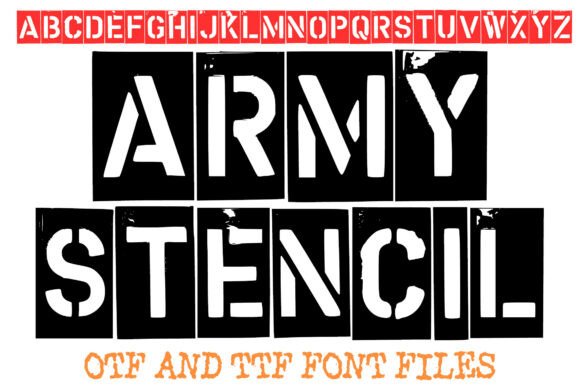
When it comes to choosing a typeface that conveys strength, durability, and a sense of history, the Army Stencil font stands out as a compelling option. This bold, rugged typeface was created from actual metal stencils, giving it an authentic, distressed military aesthetic. Unlike many digitally designed fonts that attempt to mimic industrial styles, Army Stencil carries the visual DNA of real-world usage—its letterforms show signs of wear, texture, and imperfection that lend credibility to designs aiming for a raw, battle-tested look.
What Makes Army Stencil Unique?
The distinctiveness of Army Stencil lies in its origin. Rather than being drawn from scratch in a design program, it was scanned and digitized from physical stencils used in military applications. This gives the font a tactile, weathered quality that’s hard to replicate with synthetic effects. Each character retains the irregularities of hand-cut metal, including jagged edges, inconsistent thickness, and small gaps that suggest real-world use and aging.
Available in both OTF and TTF formats, Army Stencil integrates smoothly into major design platforms like Adobe Illustrator, Photoshop, and InDesign, as well as free tools like GIMP and Inkscape. Its adaptability across software environments makes it accessible for both professional designers and hobbyists working on print, digital, or merchandise-based projects.
Use Cases Where Army Stencil Excels
Because of its strong visual identity, Army Stencil is best suited for projects that benefit from a tough, no-nonsense aesthetic. It works especially well in:
- Military-themed designs – From unit patches to recruitment posters, this font reinforces a sense of discipline and authority.
- Survival and outdoor branding – Gear labels, camping merchandise, and tactical apparel often use Army Stencil to evoke ruggedness and reliability.
- Vintage packaging and retro branding – When a product needs to feel handcrafted or historically grounded, Army Stencil adds a layer of authenticity.
- DIY crafts and signage – Its stencil-based structure allows for easy cutting and application in physical projects like stenciling walls or creating custom apparel.
Comparing Army Stencil to Similar Fonts
While Army Stencil has a strong identity, it's not the only option for designers seeking a rugged or industrial look. Other fonts in this category vary in their approach to distressing, weight, and historical accuracy. Some are digitally created to resemble stencils, while others take inspiration from graffiti, machinery tags, or wartime signage.
Compared to more stylized or decorative fonts, Army Stencil offers a more grounded, realistic feel. It doesn’t rely on exaggerated textures or artificial effects. Instead, it presents a straightforward, utilitarian appearance that feels earned rather than applied. This makes it more appropriate for serious or professional applications where authenticity matters.
However, for projects that need a cleaner or more refined stencil appearance—such as high-end product packaging or minimalist branding—other stencil fonts may be more appropriate. Some alternatives offer tighter spacing, smoother edges, or more uniform character widths, which can enhance readability and elegance in certain contexts.
Strengths and Limitations of Army Stencil
Like any design tool, Army Stencil has both advantages and drawbacks depending on how and where it’s used. Understanding these can help designers make more informed choices.
Key Strengths:
- Authentic military aesthetic – The font’s origin gives it a unique, credible edge in military and industrial design.
- High visual impact – Its bold weight and rough texture make it ideal for headlines, logos, and attention-grabbing text.
- Easy to stencil – The letterforms are designed with breaks and cutouts that make them suitable for physical stenciling applications.
- Good cross-platform compatibility – Available in both OTF and TTF, it works well in a wide range of design software.
Potential Limitations:
- Reduced readability at small sizes – Due to its rough edges and uneven thickness, Army Stencil can become hard to read in body text or small captions.
- Limited stylistic flexibility – Its strong visual identity can overpower more subtle or refined designs.
- May feel too aggressive for some contexts – Brands aiming for a softer or more approachable tone may find this font too intense.
When Army Stencil Is the Right Choice
Army Stencil shines in situations where a design needs to communicate toughness, durability, or a connection to military or industrial history. It’s particularly effective when used sparingly—such as for headlines, logos, or key graphics—rather than for extended blocks of text. Designers working on:
- Military or survivalist-themed merchandise
- Industrial or construction-related branding
- Retro-style posters and packaging
- DIY stencil projects and signage
...will find Army Stencil to be a versatile and impactful tool. It pairs well with clean sans-serif fonts for contrast and can be layered with textures or weathering effects to enhance its rugged appeal.
When to Consider Alternatives
Despite its strengths, Army Stencil isn’t a one-size-fits-all solution. For projects that require:
- High readability in small text – A more legible sans-serif or serif font may be better suited.
- A modern or minimalist aesthetic – Sleeker stencil fonts or geometric typefaces might align better with contemporary branding.
- International language support – Some stencil fonts have limited glyph sets, which could affect usability in multilingual designs.
- Consistent visual weight – If a polished, uniform look is more important than ruggedness, a digitally refined stencil may be preferable.
In these cases, exploring other stencil fonts or alternative design approaches can lead to better results.
Final Thoughts: Evaluating Army Stencil for Your Project
Choosing the right font is more than just a matter of style—it’s about matching the tone, function, and audience of a design. Army Stencil offers a compelling combination of authenticity, visual strength, and practical usability that few other fonts can replicate. Its real-world origins give it a unique edge in military, survival, and industrial design contexts.
However, like any design decision, it’s important to weigh its benefits against its limitations. If your project requires a bold, weathered look that feels earned rather than applied, Army Stencil is a strong contender. But if clarity, elegance, or subtlety is a priority, you may want to explore other stencil or industrial-style fonts that better fit your needs.
Ultimately, Army Stencil is a powerful tool in the right hands—especially when the goal is to evoke strength, history, and resilience through typography.