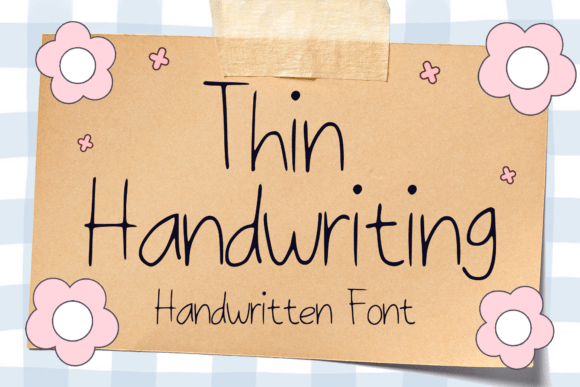
Thin Handwriting: The Versatile Pen Font That Adds Personality to Any Design
Designers and creators are always on the lookout for fonts that bring a personal, expressive touch to their work. Thin Handwriting fits the bill perfectly. It’s a lightweight, fun, and approachable font that mimics natural handwriting, making it ideal for projects that need a human feel without sacrificing readability. Whether you're crafting a logo, designing a t-shirt, or putting together a children's book illustration, this font brings a unique charm that connects with audiences in a meaningful way.
What Makes Thin Handwriting Stand Out?
At first glance, Thin Handwriting looks like someone carefully wrote each letter with a fine-tip pen. The strokes are light and fluid, giving the font a relaxed, organic appearance. Unlike rigid, mechanical typefaces, this one feels alive and expressive. It’s not overly stylized, which means it works well in both digital and print formats without overwhelming the design.
One of the standout qualities of Thin Handwriting is its versatility. It maintains legibility even at smaller sizes, which makes it suitable for a wide variety of applications—from social media graphics to product packaging. And because it's a digital font, you get the convenience of typing naturally while still preserving the charm of handwritten text.
When and Where to Use Thin Handwriting
Because of its casual and personable tone, Thin Handwriting is perfect for creative projects that need a touch of warmth. Here are some real-world applications where this font shines:
- Logo design: Especially for small businesses or brands that want to appear approachable and down-to-earth.
- Handmade product labels: Ideal for artisanal food packaging, candles, or skincare products that emphasize craftsmanship.
- Children’s book illustrations: Its playful appearance makes it great for captions, dialogue bubbles, or story elements.
- Personal blogs and social media posts: Adds a handwritten note feel to quotes, captions, or headers.
- Comic strips and cartoons: Enhances the informal tone of speech bubbles and character dialogue.
It also works well in digital design, especially when you want to create a sense of authenticity. Think of mobile app interfaces, website headers, or email newsletters where a more personable tone is desired.
How Different Users Benefit from Thin Handwriting
Let’s break down how various types of users can take advantage of this font in their everyday work:
- Creative freelancers: Illustrators and graphic designers often use Thin Handwriting in editorial work or branding projects that call for a softer, more intimate tone.
- Small business owners: From greeting cards to product tags, this font helps give handmade or boutique-style brands a more personal and authentic look.
- Educators: Teachers and curriculum designers can use it in handouts, flashcards, or classroom posters to make learning materials feel less formal and more engaging.
- Bloggers and content creators: Especially those in lifestyle, parenting, or creative niches, can use Thin Handwriting to enhance visual storytelling and make quotes or captions stand out.
- Merchandise designers: Whether it's a t-shirt, mug, or sticker, this font adds a unique, hand-crafted appeal that mass-produced fonts can't match.
Things to Consider Before Using Thin Handwriting
While Thin Handwriting is incredibly useful, it’s not a one-size-fits-all solution. Here are a few practical considerations to keep in mind:
- Legibility at a distance: Because of its thin strokes, it may not be the best choice for large-format signage or presentations where viewers are far from the screen.
- Formality of the context: It’s not suited for legal documents, academic papers, or corporate reports where a more traditional serif or sans-serif font would be more appropriate.
- Font licensing: Make sure you understand the licensing terms, especially if you're using it for commercial products like merchandise or logos.
- Pairing with other fonts: To maintain visual harmony, pair Thin Handwriting with clean, simple fonts like sans-serif typefaces that won’t compete with its playful style.
Also, keep in mind that not all handwriting-style fonts are created equal. Thin Handwriting stands out because it balances personality with readability—something that’s easy to overlook when browsing font libraries.
Real-World Examples That Show Its Impact
Let’s look at a few practical examples of how Thin Handwriting can transform a design:
- A local bakery’s Instagram post: Using Thin Handwriting for the caption “Fresh bread every morning!” gives the post a warm, inviting feel that matches the brand’s home-baked image.
- A children’s book: An illustrator might use the font for character dialogue to give the impression that the characters are literally speaking in their own handwriting.
- A wedding invitation: For a rustic or DIY-style invitation, Thin Handwriting can be used in the RSVP section or for a personal note from the couple.
- A comic book: The font works especially well in indie comics where artists want to maintain a hand-drawn aesthetic across all elements, including the text.
In each of these cases, the font doesn’t just convey information—it enhances the emotional tone of the design and makes the message more memorable.
Conclusion: A Font That Feels Like a Personal Touch
In a world full of digital fonts that feel cold or generic, Thin Handwriting offers a refreshing alternative. It bridges the gap between digital efficiency and the warmth of handwriting. Whether you're designing for personal use or a commercial project, this font brings a sense of authenticity and approachability that resonates with audiences. It’s not just about how something looks—it’s about how it makes people feel. And with Thin Handwriting, the feeling is always warm, friendly, and uniquely human.