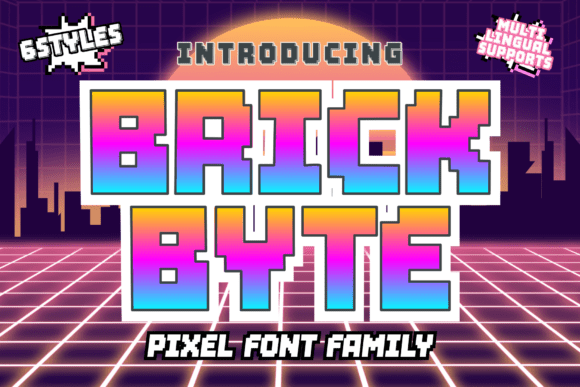
Brick Byte: A Structured, Playful Display Font for Digital Projects
Brick Byte stands out as a bold, pixel-inspired display typeface designed to evoke the look and feel of voxel art and sandbox games. Its square-cut, chunky letterforms mimic the blocky aesthetics of digital building blocks, making it a popular choice for designers seeking a retro yet structured visual tone. Unlike many modern sans-serif or serif fonts aimed at readability and minimalism, Brick Byte leans into a more tactile, game-like design language that appeals to a niche but growing audience.
Each character in Brick Byte is constructed with deliberate angularity and uniformity, giving the font a consistent visual rhythm that works especially well in digital environments where structure and clarity matter. This design choice makes it ideal for UI elements, game titles, branding materials, or promotional content where a sense of playfulness and architectural precision is desired. The pixel-perfect edge treatment enhances its digital authenticity, aligning it with the visual style of early video games and contemporary voxel-based creations.
How Brick Byte Stands Out from Similar Fonts
When compared to other display fonts inspired by pixel art or retro gaming, Brick Byte distinguishes itself through its heavier weight and more defined edges. Many pixel-style fonts aim for a lightweight, nostalgic look that mimics CRT screen limitations, but Brick Byte embraces a more robust form. This heavier build makes it more legible at a distance or in larger sizes, which is particularly useful in user interface design or digital signage.
While some alternatives may offer a wider variety of weights or character sets, Brick Byte focuses on a compact, cohesive style that prioritizes visual impact over typographic versatility. It's not intended for long-form reading or body text, which sets it apart from more neutral or multipurpose fonts. Instead, it thrives in short-form applications like headlines, logos, and game UI elements where a strong visual identity is key.
Strengths and Limitations in Practical Use
One of the strongest attributes of Brick Byte is its ability to convey a sense of structure and playfulness simultaneously. This dual quality makes it particularly effective in branding for tech startups, game development studios, or educational platforms that want to communicate both creativity and organization. Its chunky aesthetic also makes it well-suited for children’s media, digital toys, or interactive learning tools where visual engagement is crucial.
However, this same visual density can become a drawback in certain contexts. For example, in environments where space is limited or where the font needs to be used at small sizes, Brick Byte may lose clarity. The angular edges and thick strokes can blur together on lower-resolution displays or when used in long strings of text. Additionally, its stylistic nature means it may not be appropriate for formal or professional settings where a more traditional typographic style is expected.
Best Fit Situations for Brick Byte
Designers who are working on projects that benefit from a strong visual motif—especially those rooted in gaming, digital construction, or pixel art—will find Brick Byte to be a compelling choice. It works particularly well in the following scenarios:
- Game UI and HUD design: Whether for mobile games, indie titles, or browser-based adventures, Brick Byte’s structured look reinforces the game’s environment and enhances immersion.
- Brand identity and logos: Companies aiming for a playful yet tech-forward image can use Brick Byte in logo design or promotional materials to stand out visually.
- Website headers and banners: For landing pages or digital campaigns with a gaming or tech theme, Brick Byte adds a distinctive edge that draws attention without overwhelming the layout.
When to Consider Alternatives
Despite its strengths, there are situations where Brick Byte may not be the most appropriate choice. For instance, if the design project requires a font that is highly legible in body text or one that blends into the background rather than standing out, a more neutral or humanist font might be better suited. Similarly, if the aesthetic direction leans more toward hand-drawn or organic styles rather than digital or geometric, a different typeface altogether may be necessary.
Designers should also consider licensing and availability when choosing Brick Byte. While many modern fonts are available through subscription services or open-source libraries, it’s important to verify that the font is accessible across all intended platforms and that its licensing terms align with the project’s scope and distribution plan.
Comparing Design Approaches and Font Categories
Within the broader category of pixel and block-style fonts, Brick Byte falls into the “structured” or “voxel-inspired” subcategory. This differentiates it from more abstract or minimalist pixel fonts that aim to replicate the look of early computer displays with minimal detail. In contrast, Brick Byte embraces a more deliberate, architectural form that feels intentional and built rather than simply pixelated.
Compared to slab serif or geometric sans-serif fonts, Brick Byte offers a more stylized and thematic approach. While slab serifs provide a strong presence with their thick serifs and bold lines, they often convey a more traditional or authoritative tone. Geometric sans-serif fonts, on the other hand, emphasize clean lines and modern simplicity, which may not align with the playful, structured aesthetic that Brick Byte delivers.
Making an Informed Font Choice
Selecting the right typeface involves more than just visual appeal—it requires understanding how the font functions within the context of the design and how it aligns with the overall message and audience. Brick Byte excels in environments where a digital, blocky aesthetic is appropriate and where visual impact is a priority. However, it’s not a one-size-fits-all solution.
Before finalizing the decision, designers should test Brick Byte in the intended environment. This includes previewing it across different screen sizes, checking its legibility in various color schemes, and ensuring that it complements rather than competes with other design elements. Comparing it side-by-side with alternative fonts can also help clarify whether its distinctive style is the best fit for the project’s goals.